Start typing any service, treatment, goal, provider, membership, or familiar term. Popular links are shortcuts—not the only available searches. Search is educational and does not diagnose, prescribe, or establish candidacy.
Search by a service name, familiar treatment term, goal, provider, or membership. The Popular links are shortcuts—not the full range of available searches.
Nineteen Years, Two Deployments, And One Very Small Apartment.
Eternal didn’t start in 2025. It started with a message sent across a war zone, and a long series of people deciding to trust each other before there was any evidence they should. 13 short chapters — read one, or read them all.
13 chapters — swipe or tap any card to read
2006
An Ocean Apart
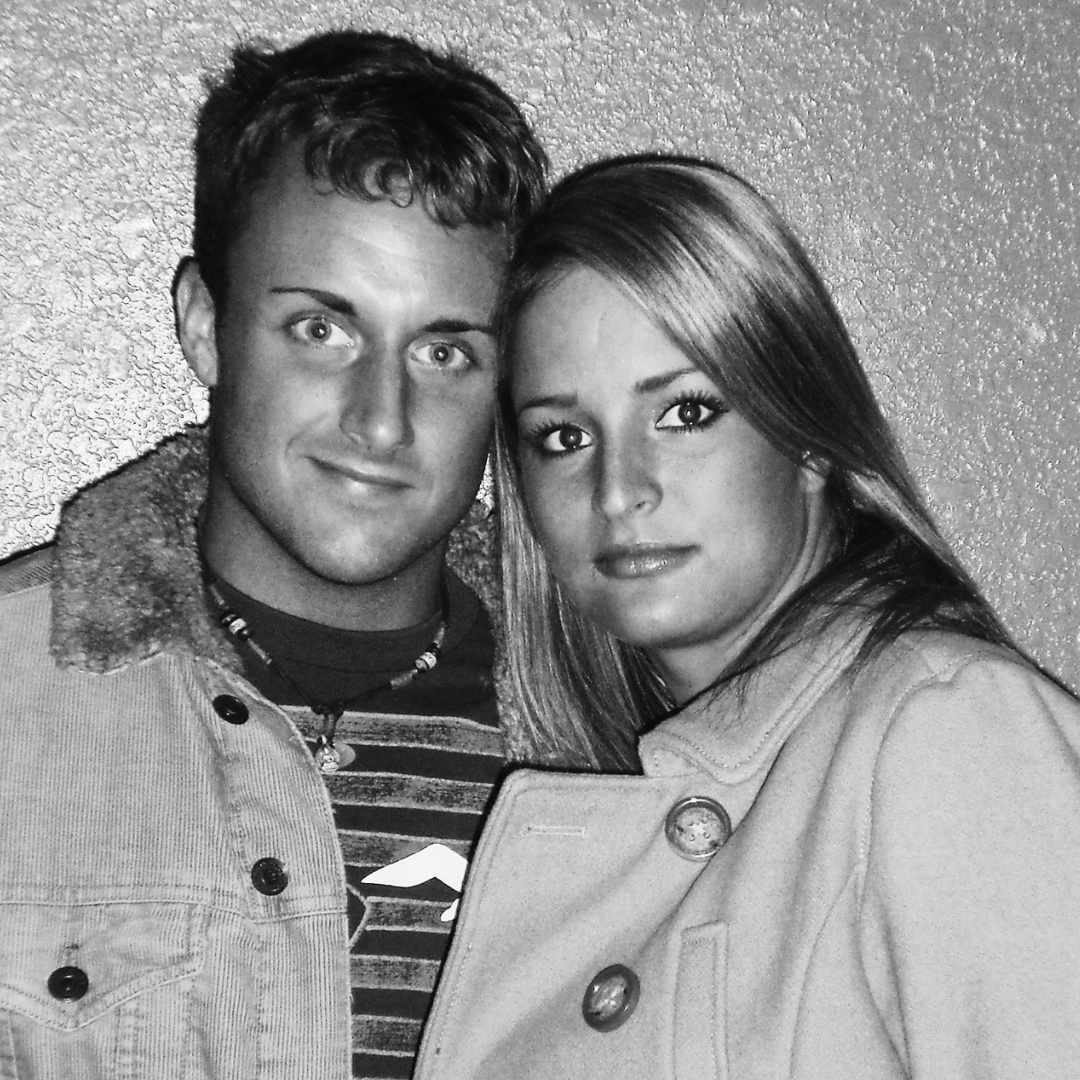
April 2007. The first time in the same room.
This is the story of Eternal MedSpa. It begins the way it still begins every morning — in a treatment room on Clark Road, with a guest in a chair and a provider whose job is to tell her the truth about what she does and does not need. That is the entire business. Everything else is detail.
But it did not start there. To understand why it works this way, you have to go back twenty years — to a war, an ocean, and two people who had not yet met.
In 2006 they were living lives that had nothing to do with each other. Antje was finishing her first degree in Germany, and Jason had just arrived in Baghdad — a soldier a long way from the small Ohio town he grew up in, in a place where a lot of people don't come home the same, if they come home at all.
Friends introduced them anyway, the way friends sometimes do without knowing what they've started. It began on MySpace and moved to AOL Messenger, typed out across a war and an ocean and a time difference that meant one of them was always asleep while the other waited on a reply. Eventually they gave up on typing and started calling, at whatever hour happened to work for both of them.
They didn't stand in the same room until April 2007, at a gate in a crowded Dallas airport, after more than a year of knowing each other as words on a screen and a voice on a line. She stayed almost a month, and before she flew back to Germany he proposed at a restaurant they liked, with a ring he'd put on a credit card because there was no other way to pay for it. Neither of them had anything to go on except the other person's word. It would not be the last time. There was a deployment coming, and no honest way to know what it would leave behind.
2007
She Came Back
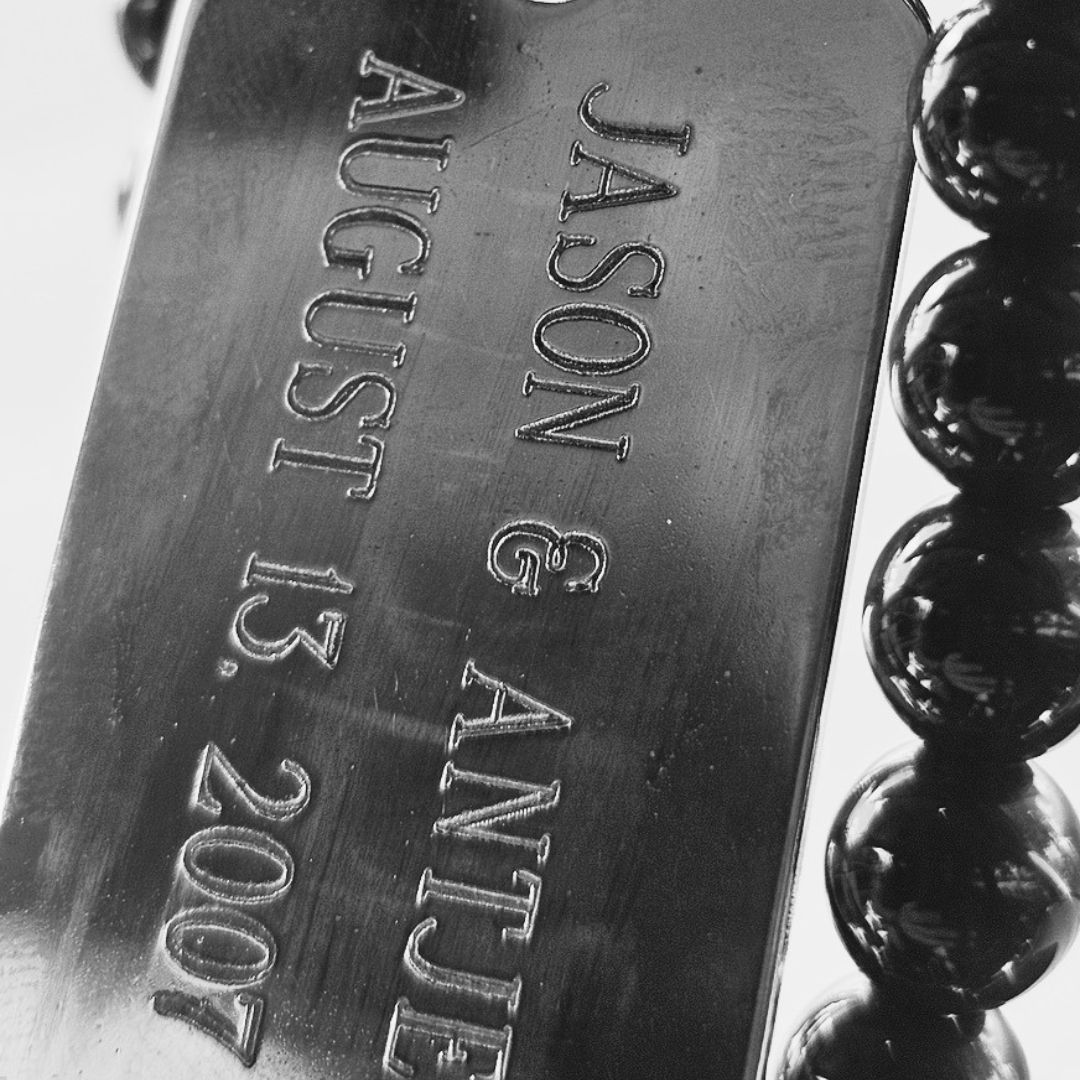
Engraved at a Walmart on the way home from the courthouse, August 13, 2007.
Antje had a degree to finish, so she went back to Germany and promised to return once it was done. April to mid-July doesn't look like long written down, though it didn't feel that way at the time.
Jason spent those months getting a place ready: five hundred square feet in Texas at seven hundred dollars a month, not much money now, a serious number then, signed by a soldier betting on someone arriving from another country.
She landed that July, and there was still no wedding planned — no money for one, and no time before the deployment. So on the thirteenth of August Jason called her from work in the middle of the day and said let's go get married, which was met with a beat of panic on her end, because she wanted a chance to put on something nice first. He drove home, picked Antje up, and they went to the county courthouse, where getting married turns out to be a take-a-number affair. They needed a witness, and to this day he can't remember whether it was a friend or somebody pulled out of the hallway.
Antje had her engagement ring. Jason had nothing to wear, so afterward they drove to Walmart and bought a stainless steel band that he wore for years before anything nicer replaced it. On the way out they passed one of those engraving machines and stopped long enough to stamp a dog tag with both their names and the date.
Nobody's parents knew until it was done. Hers, understandably, had not pictured a twenty-two-year-old soldier. A little while later a check for a thousand dollars arrived in the mail along with a box of old pots and pans, which was, in its way, the blessing.
They told themselves they'd do the real wedding in five years, and never got around to it. That dog tag has hung from the rearview mirror of every car she has driven since, and it is still hanging there. A cheap piece of stamped steel, standing in for a promise neither of them could prove yet. Everything that came later was built the same way.
2008
Twelve Hundred Square Feet
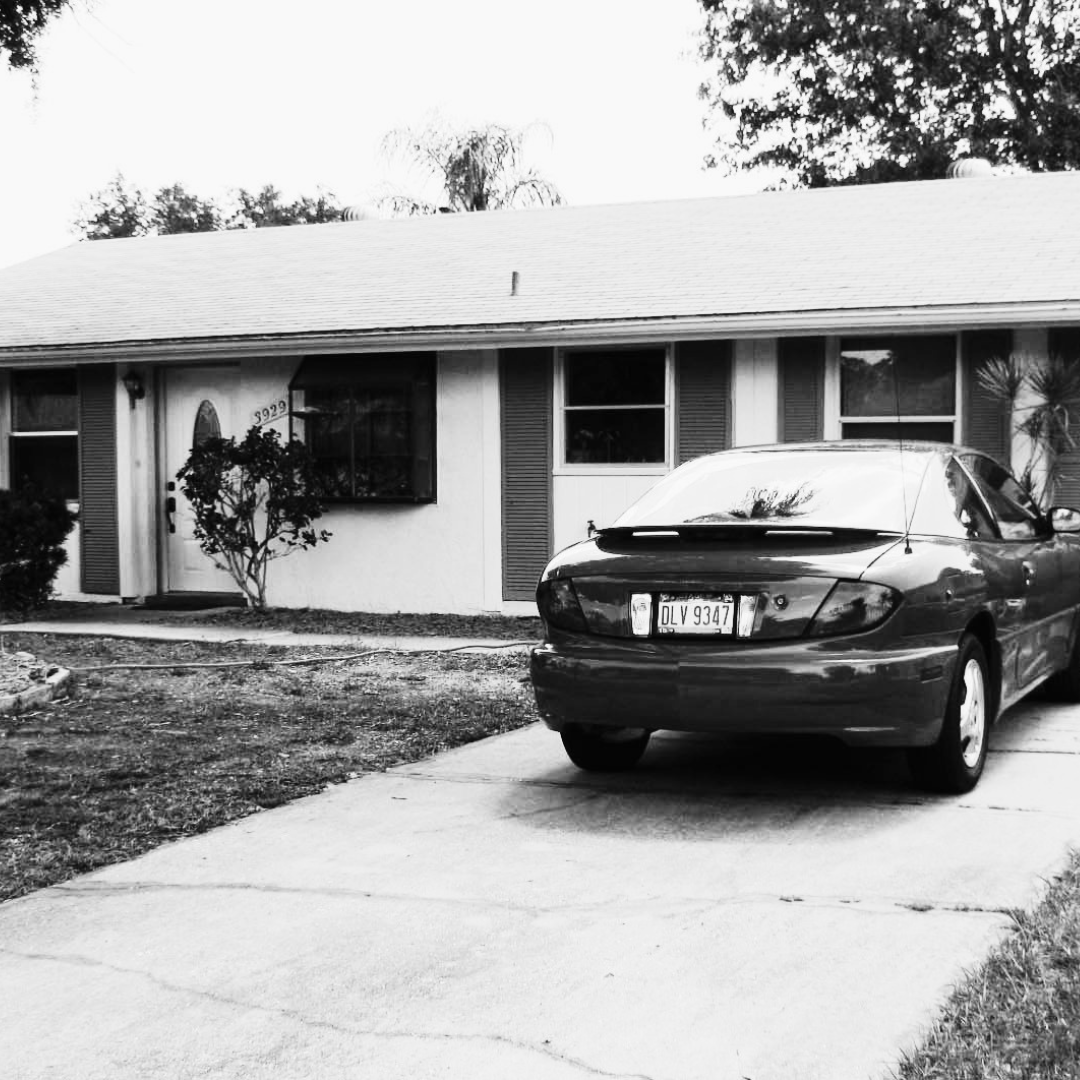
The house off Bee Ridge, and the Sunfire that got them there.New to Sarasota.
1 / 22 photos — swipe
Before the second deployment they bought a house in Sarasota to be near her mother and stepfather — twelve hundred square feet off Bee Ridge Road, which after five hundred square feet in Texas felt like the top of the world.
They moved in May 2008 with a twenty-four-foot U-Haul holding everything they owned and one car between them, a red 2005 Pontiac Sunfire with two doors, a manual transmission and crank windows. Her parents had handled the bigger renovation work before they arrived, so what was left was the painting, and the painting is where they had their first real argument as a married couple — less than a year in, over the correct way to edge the corner where the wall meets the ceiling. He had a method, she had a method, and it went on longer than either of them would care to admit. At the time it felt enormous. It was the last ordinary argument they would get to have for a year.
A few weeks later Jason packed two green duffel bags and flew back to Iraq on orders that said fifteen months before they were rolled back to twelve.
They prayed a lot that year, and not dramatically — just the ordinary, repeated kind, that the year would pass and that the house they had only just finished painting would still have both of them in it.
Antje didn't spend it waiting. She certified as a medical assistant, started nursing school, and worked at an OB-GYN practice while she studied, and the clinical foundation everything at Eternal now rests on was laid in the year Jason was gone. Both of them spent that year keeping an end of something neither could see the other holding.
2009
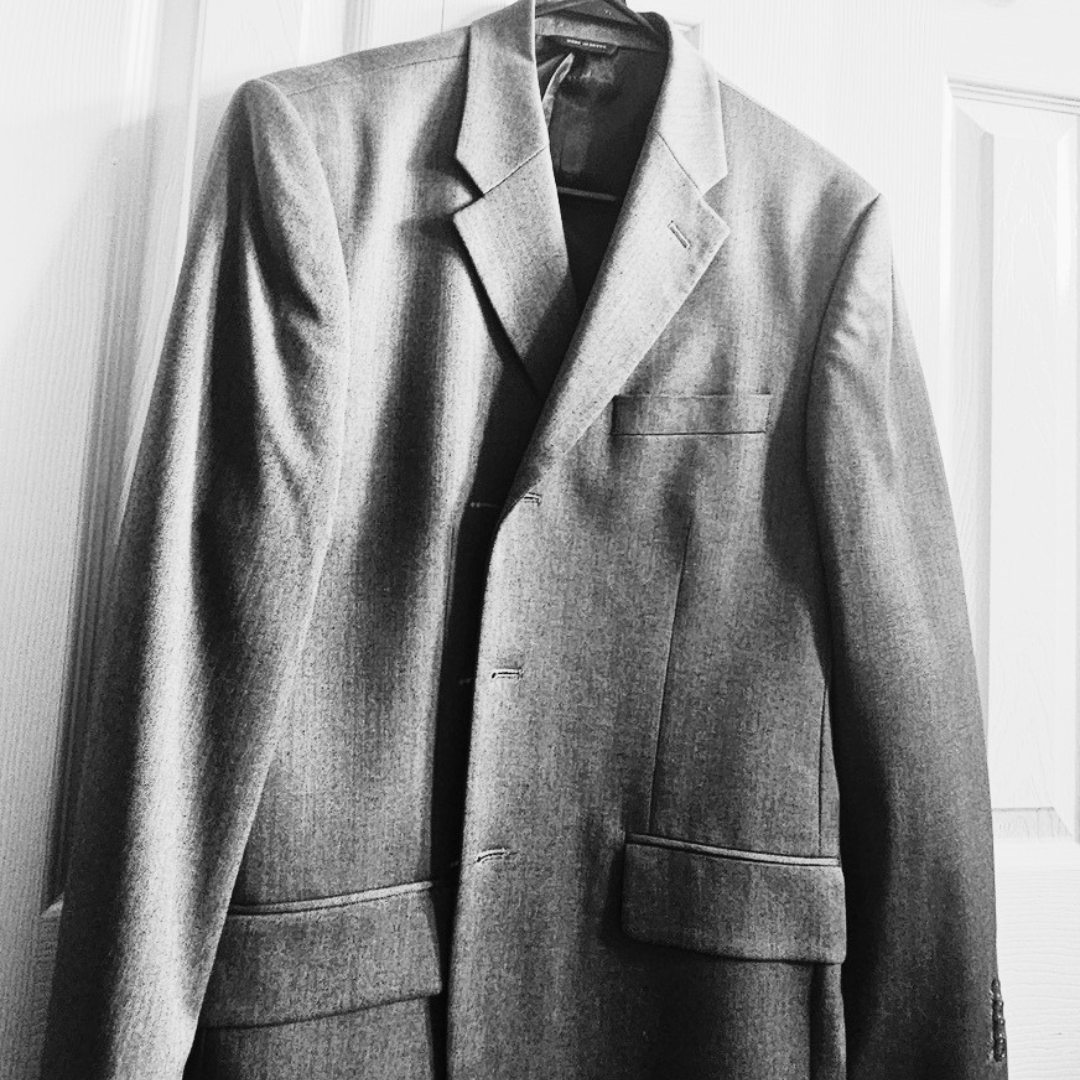
The Suit
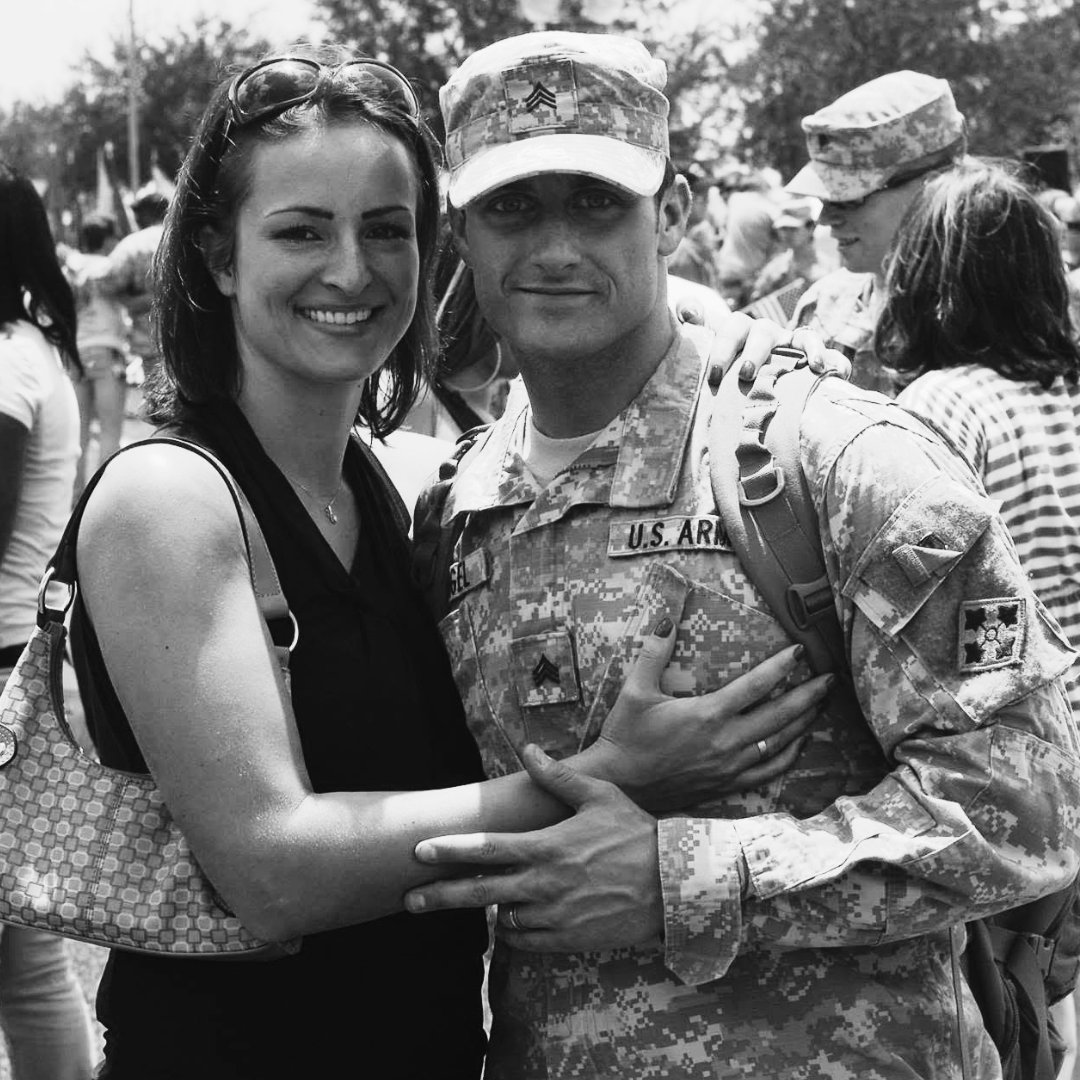
Home from Iraq, summer 2009.The suit.
1 / 22 photos — swipe
Jason came home in the summer of 2009, after more than twenty-four months in Iraq between the two tours, first in Baghdad and then north of it, and like everyone who goes, he did not come back the same. Nobody does. For a long while afterward ordinary life didn't quite fit — normal rooms, normal conversations, the pace of an ordinary Tuesday — and there were no words he could find for any of it, least of all for Antje, which made it lonelier than it needed to be. She was most of what he had. What that year left behind, once the noise of it settled, was a fairly high bar for what counts as a crisis — and a habit of staying steady inside things that would rattle most people. Sixteen years later, starting a business from nothing, that turned out to be worth more than the pension.
He also needed work, quickly. There were three plans, in order of preference: a federal job at something close to Army pay, which was around forty thousand a year; the GI Bill and the degree the Army had interrupted; or the highway patrol, the easy transition and the one he didn't want. Two months unemployed, exactly two unemployment checks, and then an interview came through.
Jason had never owned a real suit — a dress uniform, certainly, but nothing you'd wear to an interview. They drove to the outlet mall in Ellenton, where Antje insisted, and he handed over a debit card for a four-hundred-dollar tan suit from Banana Republic with a pit in his stomach, aware it would either change something or hang in a closet as a reminder that he'd bought a suit he couldn't afford. On the same trip he bought her a pair of earrings, and he still isn't sure why that's the detail that stayed with him.
Three senior executives ran the interview, all three veterans, one a Vietnam-era Special Forces soldier Jason is still in touch with today. He could feel the sweat running down his back inside the new suit. Antje was pregnant with their daughter.
Two weeks later the phone rang with an offer, and that call turned into sixteen years — the same sixteen years he would eventually walk away from for a business that didn't exist yet.
2010
Where The Roots Went
Their first.Three years later.
1 / 22 photos — swipe
Somewhere in the middle of those sixteen years, North Carolina came up. More than once. Cooler, mountains, mortgages that made sense, and a market nowhere near as crowded — on paper, an easier road for anyone starting something new. They talked about it seriously enough to look at towns.
They stayed. Not for a business reason, because there wasn't one. They stayed because their daughter — and their son, three years behind her — had friends here, and because Antje's mother and stepfather were twenty minutes away, and because the life was already here — two kids, two cats, a dog, two parakeets, school pickups, hurricane season, the heat and the bugs and the ordinary loud business of a family.
They had arrived in 2008 knowing almost nobody. Somewhere in the years after, without either of them noticing exactly when, Sarasota stopped being the place they had moved to and became the place they were from.
Which settled a question nobody had formally asked yet. Whatever they built was going to be built in this town, for the people in it.
The Long Road
All The Way Into Medicine
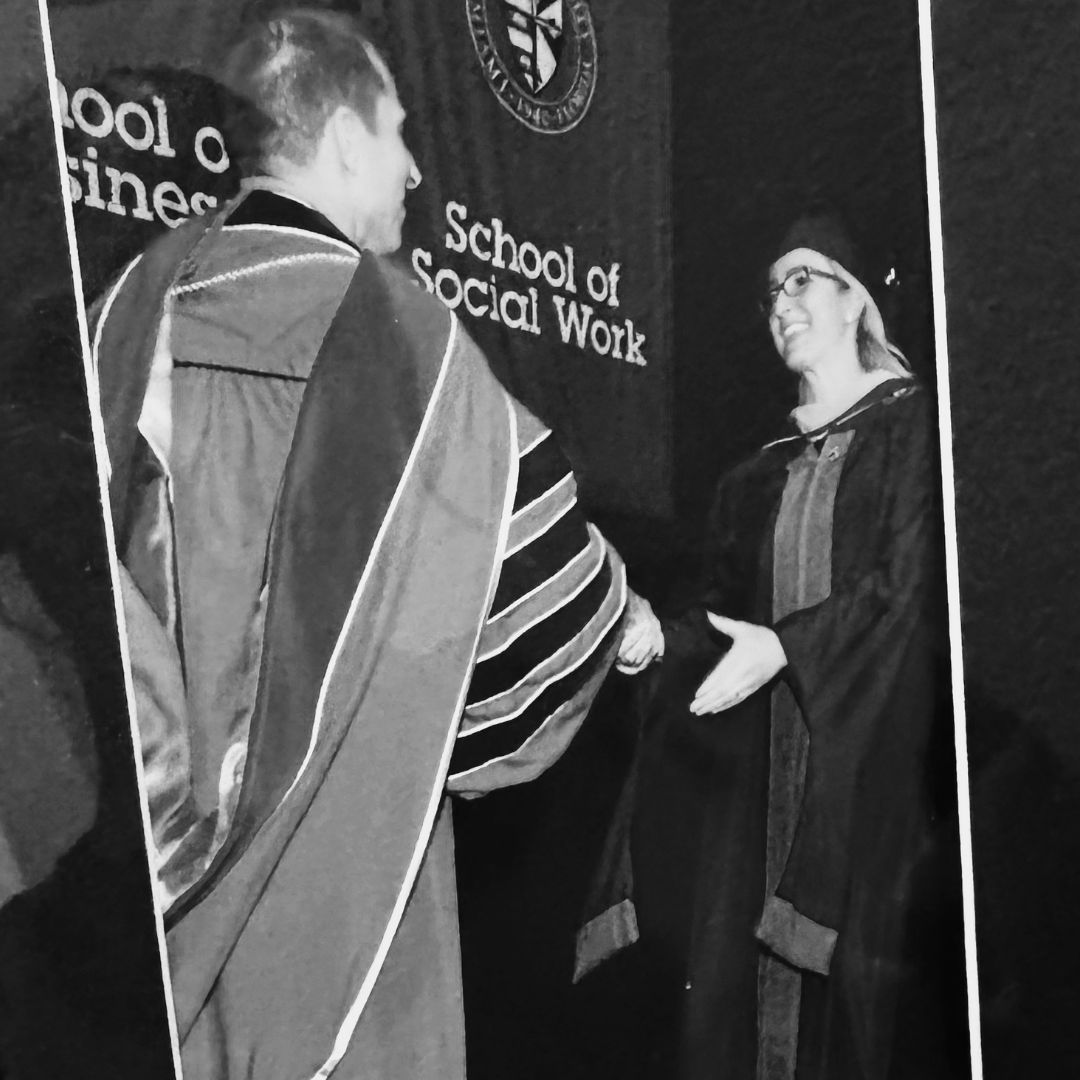
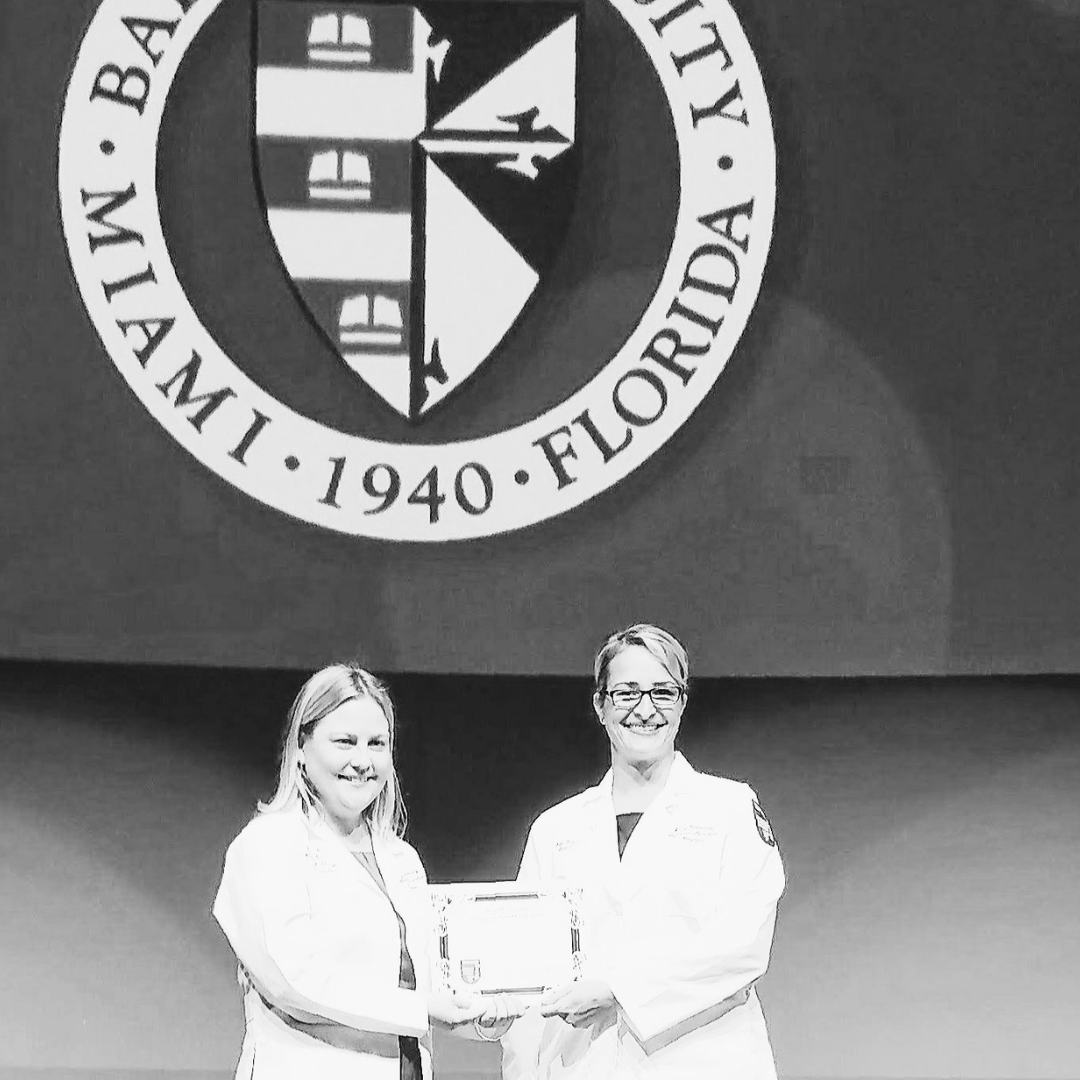
Commencement, Miami, 2019. Thirty months, two small children, one degree.Barry University, physician assistant program.In practice, years before aesthetics.Assisting in a GI oncology case.
1 / 44 photos — swipe
Whatever it turned out to be, it was going to need one of them to be a clinician — and that had been quietly under construction the whole time. The nursing school Antje started while Jason was deployed turned into an RN, and then a BSN at the University of South Florida. She spent a long stretch of those years on a cardiothoracic unit, which is not a gentle place to learn how bodies actually work. It could reasonably have stopped there. Instead there was another decision waiting: advance as a nurse practitioner and stay in nursing, or cross over into medicine as a physician assistant. Antje had wanted to be a surgeon since she was small, and while the shape of that had changed over the years, the pull toward medicine hadn't.
Physician assistant school runs close to thirty months and doesn't bend around anyone's life. Plenty of marriages don't survive it, and for long stretches theirs ran mostly on logistics — who has the kids, who is awake, who is studying. They got through it, which isn't the same as getting through it gracefully.
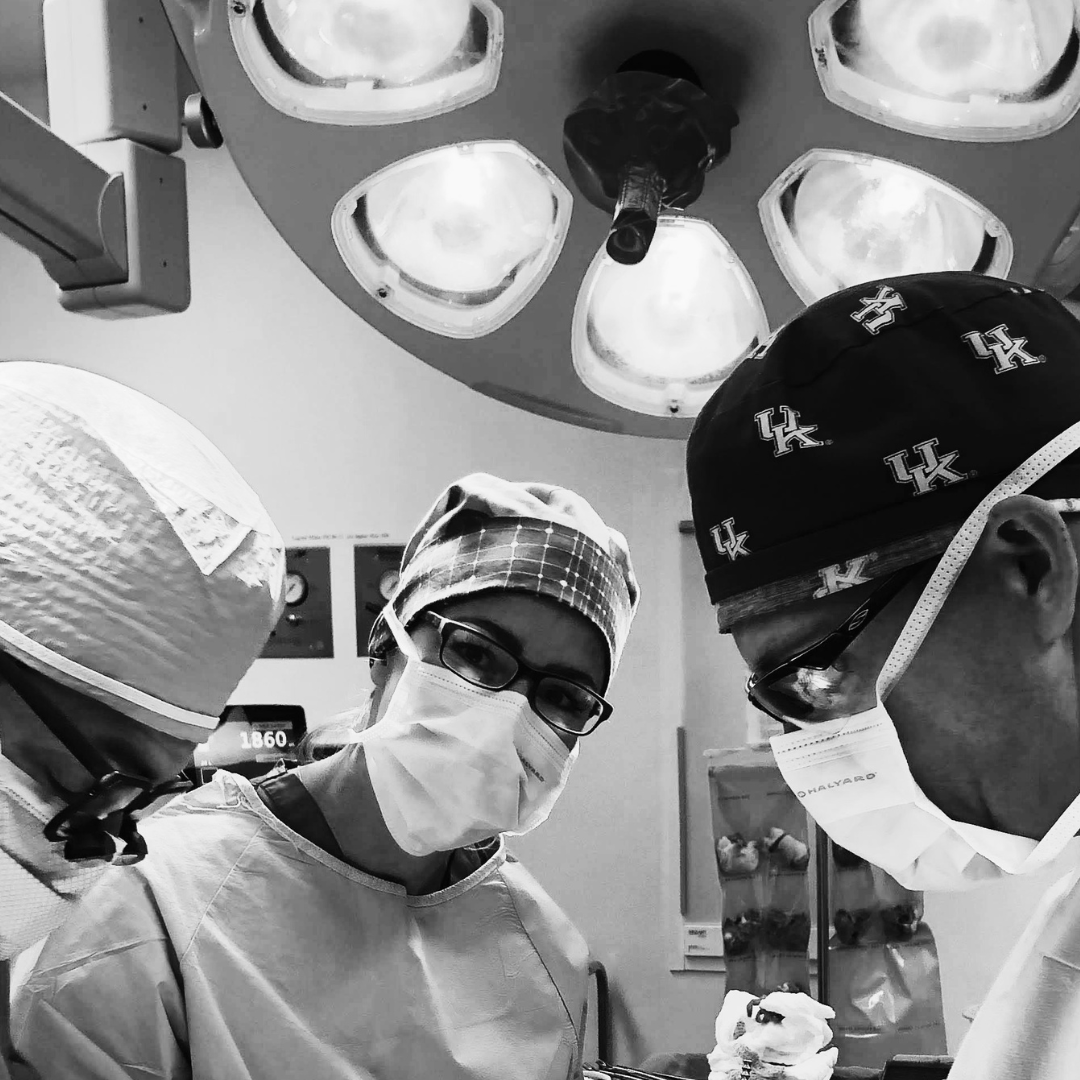
Antje went straight to work afterward in OB-GYN, assisting in surgery alongside the daily practice of medicine, and picked up emergency medicine at the same time. Cardiothoracic, surgical, obstetric, internal, emergency — the full unglamorous breadth of it, none of which anyone advertises on a med spa website.
The move into aesthetic medicine came in 2021, and it came slowly, because leaving traditional medicine was hard in direct proportion to how hard it had been to earn. What she did not do was leave any of it behind.
From the outside, two different things look alike. It is entirely possible to enter aesthetics without practicing medicine anywhere else first. Nobody here did. Eternal's providers came through hospital units, operating rooms and emergency departments. Training like that doesn't switch off when the room gets nicer. It shows up in the work.
That distinction turned out to be most of what Eternal is. It's why a conversation here can end up on hormones, or sleep, or hydration, or sun exposure, or what someone is actually eating, instead of stopping at the line on the forehead. Volume loss and wrinkles are real, and they are also, often, the last symptom in a much longer story. Reading the whole story before treating the last line of it is the difference between a provider and a technician.
Before Eternal
Two Careers, One Belief
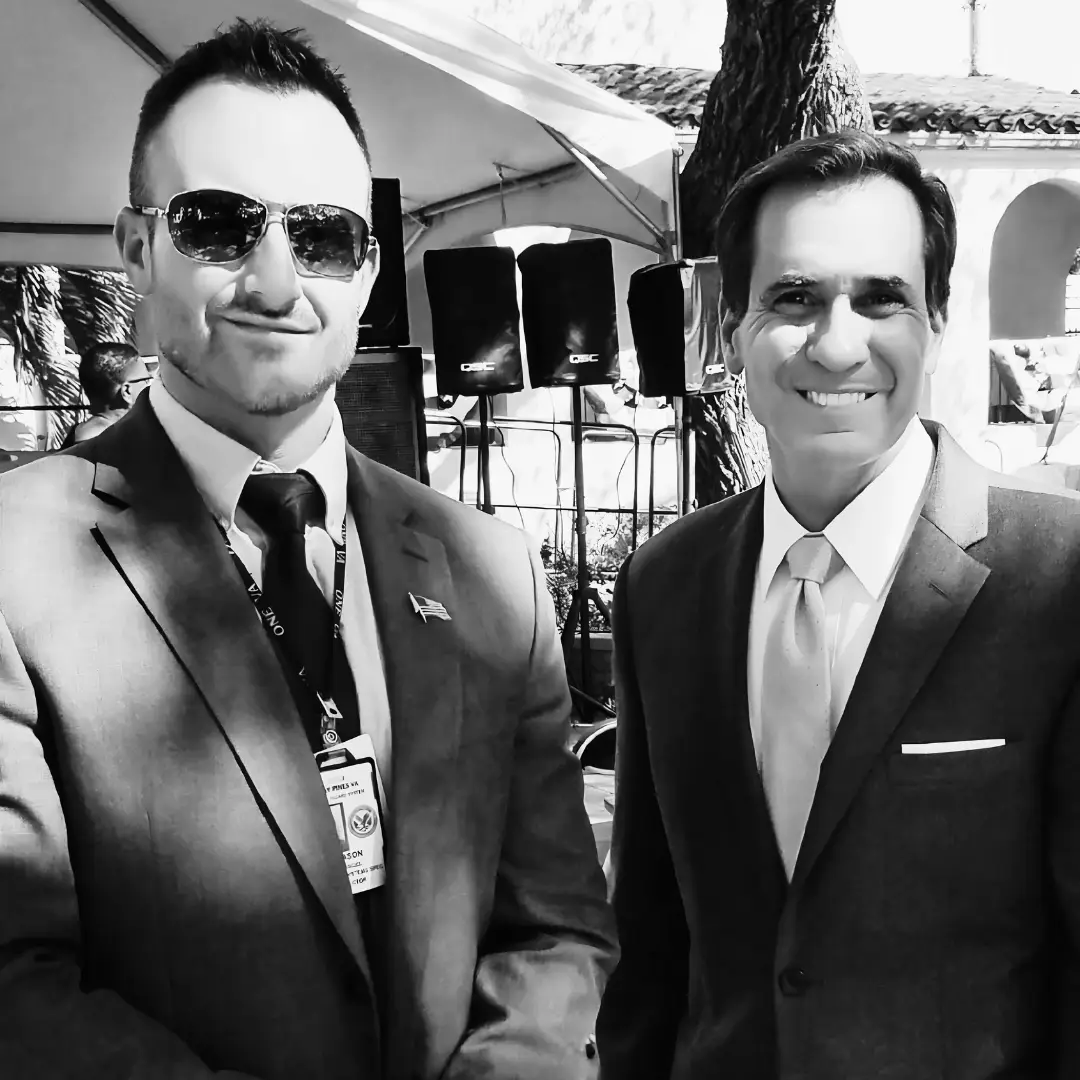
Federal service, with John Kirby — former Pentagon and State Department spokesman.
That way of practicing turned out to be portable. When Antje left her former practice, the trust didn't stay behind. Longtime patients and friends found her anyway and asked her to come see them at home, so she did — treating people who had trusted her for years in their own living rooms, one visit at a time, while a permanent home for any of it was still just a plan on paper.
While Antje was doing that, Jason was still in the career built out of the suit and the interview. Two people, two entirely different rooms, working toward the same thing without either of them calling it that yet.
His twenty-one years of federal service had run from the two deployments through the Department of Veterans Affairs, nearly all of it in communications and public affairs. He finished as a communication executive — the person responsible for how a large health system explained itself to the people it was there to serve. Somewhere along the way he finished that degree, and later graduate-level study in strategic communication at Purdue. The work went well and kept going well, which is exactly what made walking away from it feel absurd. He resigned mid-career anyway, leaving all twenty-one years on the table, because Eternal was going to need the hours and there was no version of this where both things fit.
Whatever you do, work heartily, as for the Lord and not for men.
Colossians 3:23
Between them, decades spent working inside other people's systems — and a long, fairly specific list of things they would do differently given the chance.
The Decision
The Leap
So they took it, which meant staking everything on a belief that hadn't been tested yet — that people deserve to be heard rather than sold to, and cared for rather than processed. It meant trading twenty-one years of savings and security, and a career with a name and a pension and a known ending, for something that had none of those things.
It would be easier to tell this as an escape story, except nothing needed escaping. Both careers were good ones. The pay was steady, the work was respected, and either of them could have run out the clock comfortably. That is what made it a decision rather than a reaction — comfort is pleasant for a while, and then it quietly becomes the shape of your days. Building something does the opposite. Watching a plan turn into an actual place with actual people in it is a different kind of fire, and hard to explain to anyone who hasn't felt it. They are not alike in every respect. On that, they have never disagreed.
It was not a small risk, and it was the kind that keeps you up at night long before it ever pays off. They prayed over it for months before either of them said it out loud as a decision.
For we walk by faith, not by sight.
2 Corinthians 5:7
They had signed for something unseen once before, with five hundred square feet and a seven-hundred-dollar lease, so at least the feeling was familiar. They were doing what they had done at twenty-two: taking something on someone's word, before anyone could prove it.
2025
Bigger Than The Plan
They didn't plan to start big. The first search was for a space just large enough for a couple of treatment rooms and a check-in desk, small on purpose — Jason, Antje, and one person at the front desk, growing only once growth could be justified.
The heart of man plans his way, but the Lord establishes his steps.
Proverbs 16:9
That isn't what happened. Some of the most experienced people in the market came looking for them instead — Jenn, Hailey, Alexa, Jada — and then stayed.
It is worth being plain about what that cost them. Nobody joins a business that opened last month for the security of it, and every one of them understood they were trading something steady for something that did not exist yet and might never. They took the same risk Jason and Antje took, with less information and no ownership in how it turned out. Four more people taking something on someone's word.
It wasn't about money either. Every one of them was paid well before they came here, and not one of them would tell you otherwise. What they were after is harder to write into an offer letter. Somewhere that asking for a day off is just asking — no case to build, no permission to earn, no wondering what it will cost you later. Somewhere a hard week at home is met with go, we have you, and meant. Somewhere the only thing anyone has to manage is the work in front of them.
Not a headcount. Not a line on a schedule. People who are trusted to be adults, backed without having to ask twice, and who have somewhere to be every day that feels a great deal like a second home. That is the whole offer, and it is the reason they are still here.
September 15, 2025
The Doors Opened
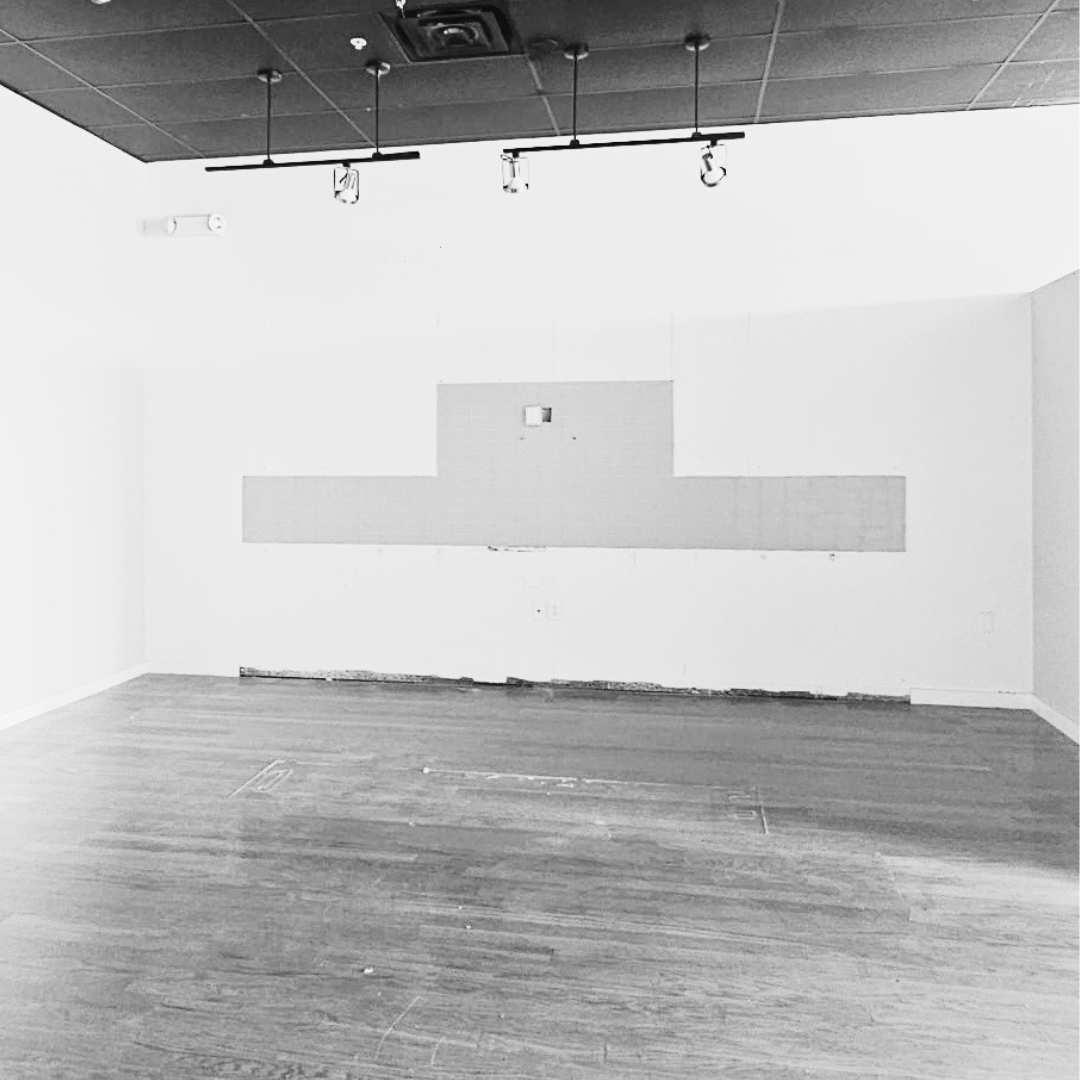
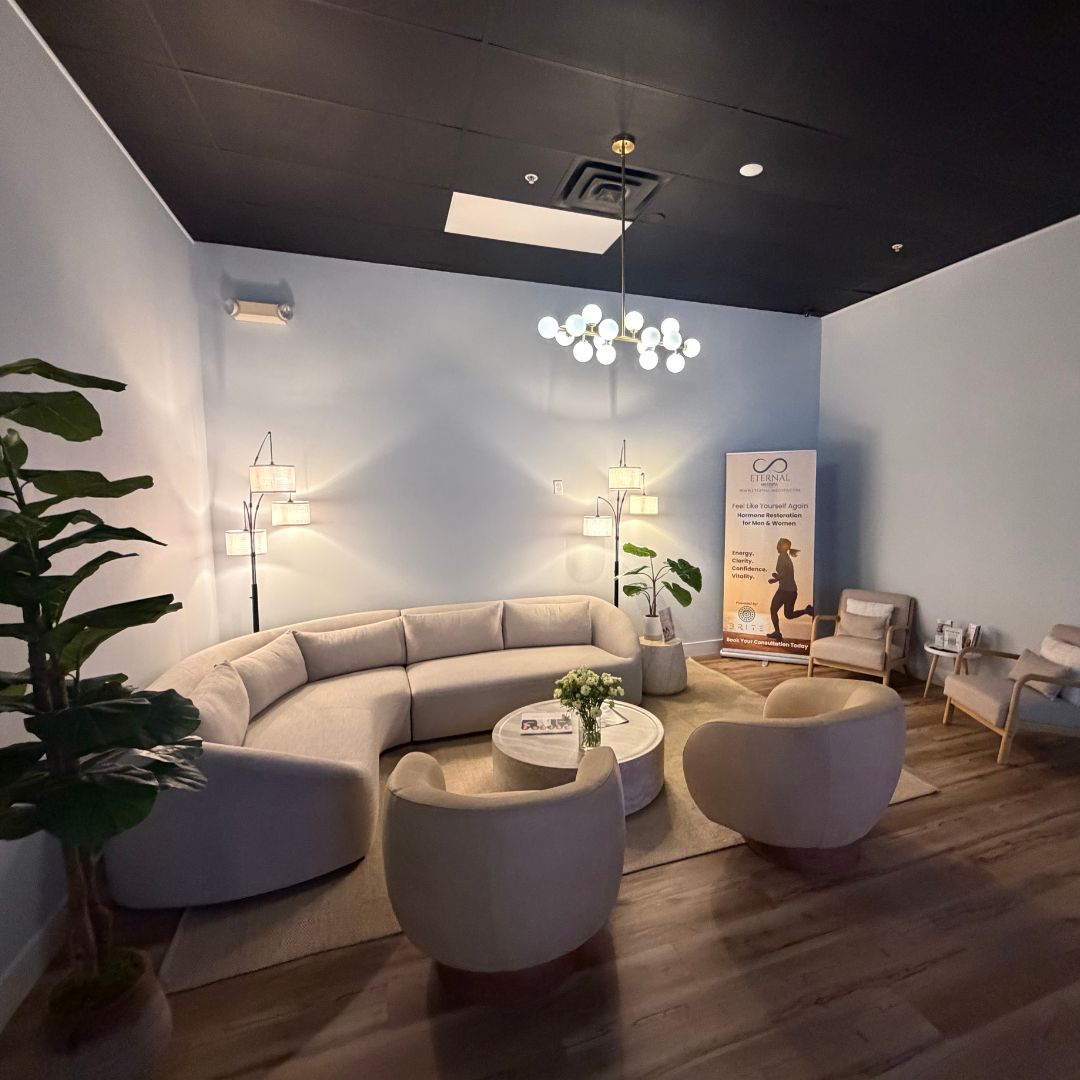
The lounge, before it was a lounge.The same room, once it was.
1 / 22 photos — swipe
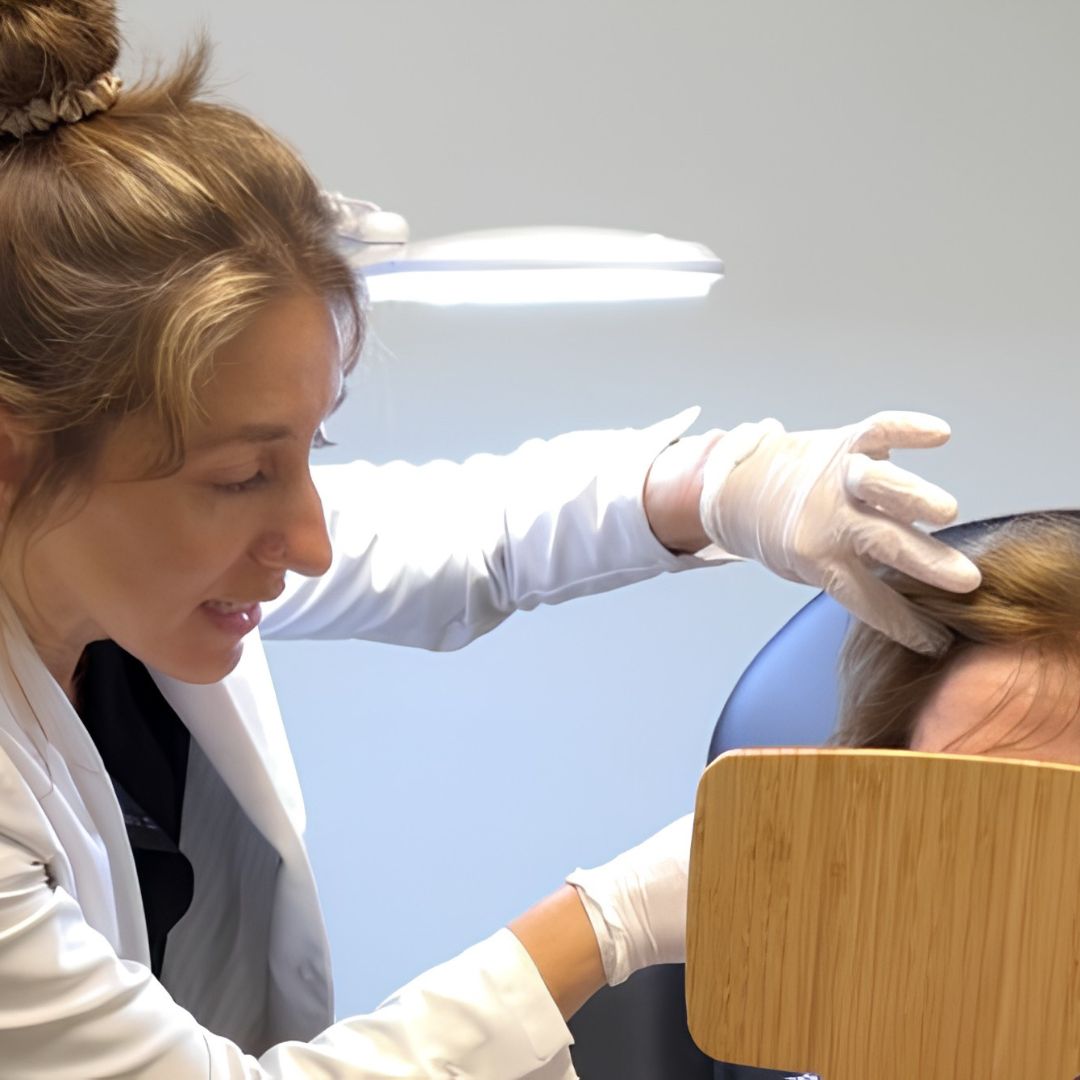
What Jenn, Hailey, Alexa and Jada brought with them was not marketing language. The medical providers came out of real clinical medicine — one of them from years in trauma surgery long before she ever picked up an aesthetic syringe — and knowing how muscle sits beneath skin, how tissue moves, how a face is genuinely built, isn't an aesthetic credential. It's a medical one, and it shows up in the work.
What none of them could bring was their guests. Contact lists belong to the practice that holds them, not to the provider, and practices generally act to keep it that way — so everyone who joined arrived without the people they had spent years earning. That is simply how this industry works, and it is the hurdle every new practice starts behind. Closing it took most of a year: ordinary marketing, community outreach, and a fair number of guests who went looking on their own and found them anyway.
Then, on September 15, 2025, the doors opened. Everything before that morning had been a plan and a risk, real only on paper and in savings already spent. Everything after it was real in a different way — a waiting room with people in it, a first appointment on the books, a business that finally existed outside of two people's belief that it should.
One Year In
Still The Whole Point
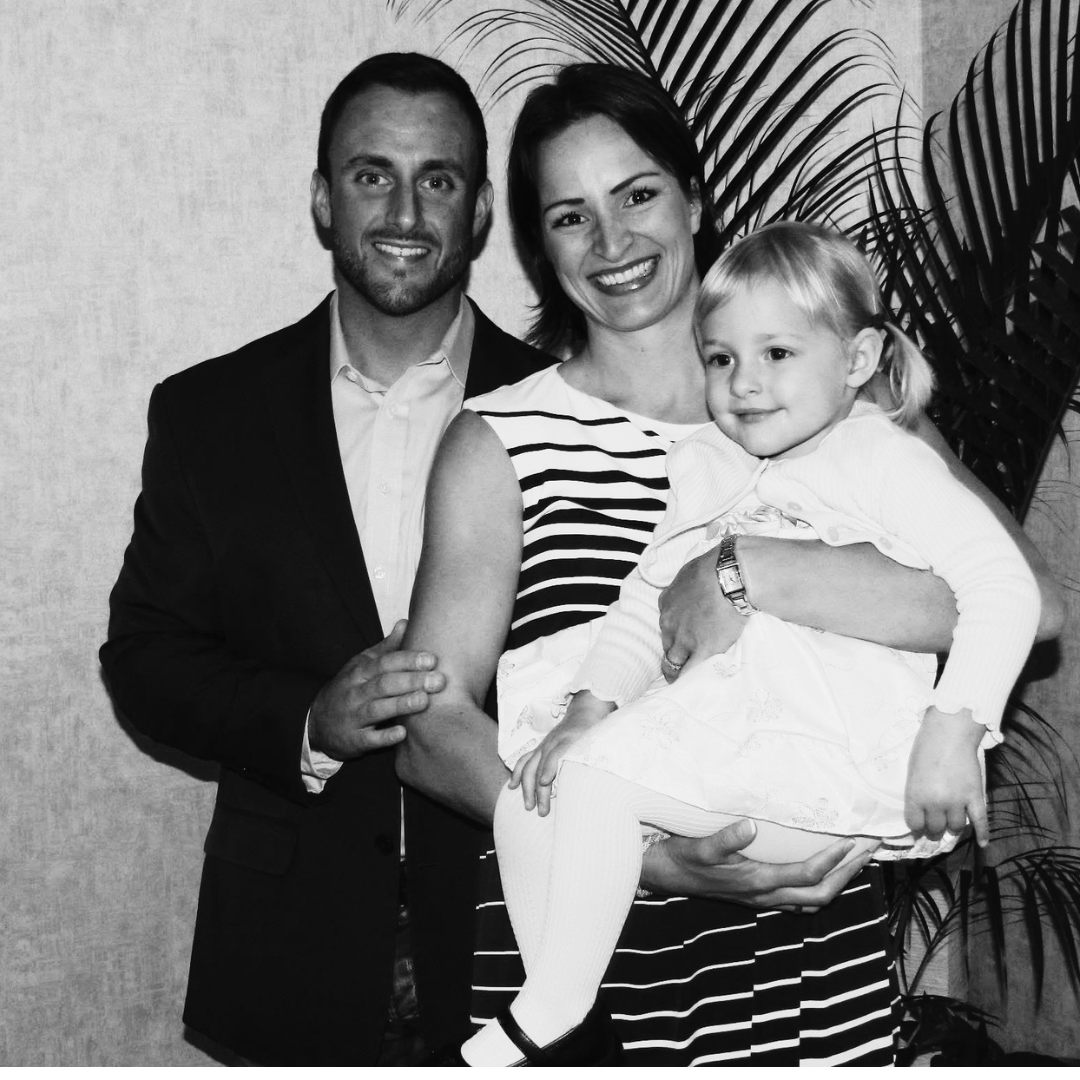
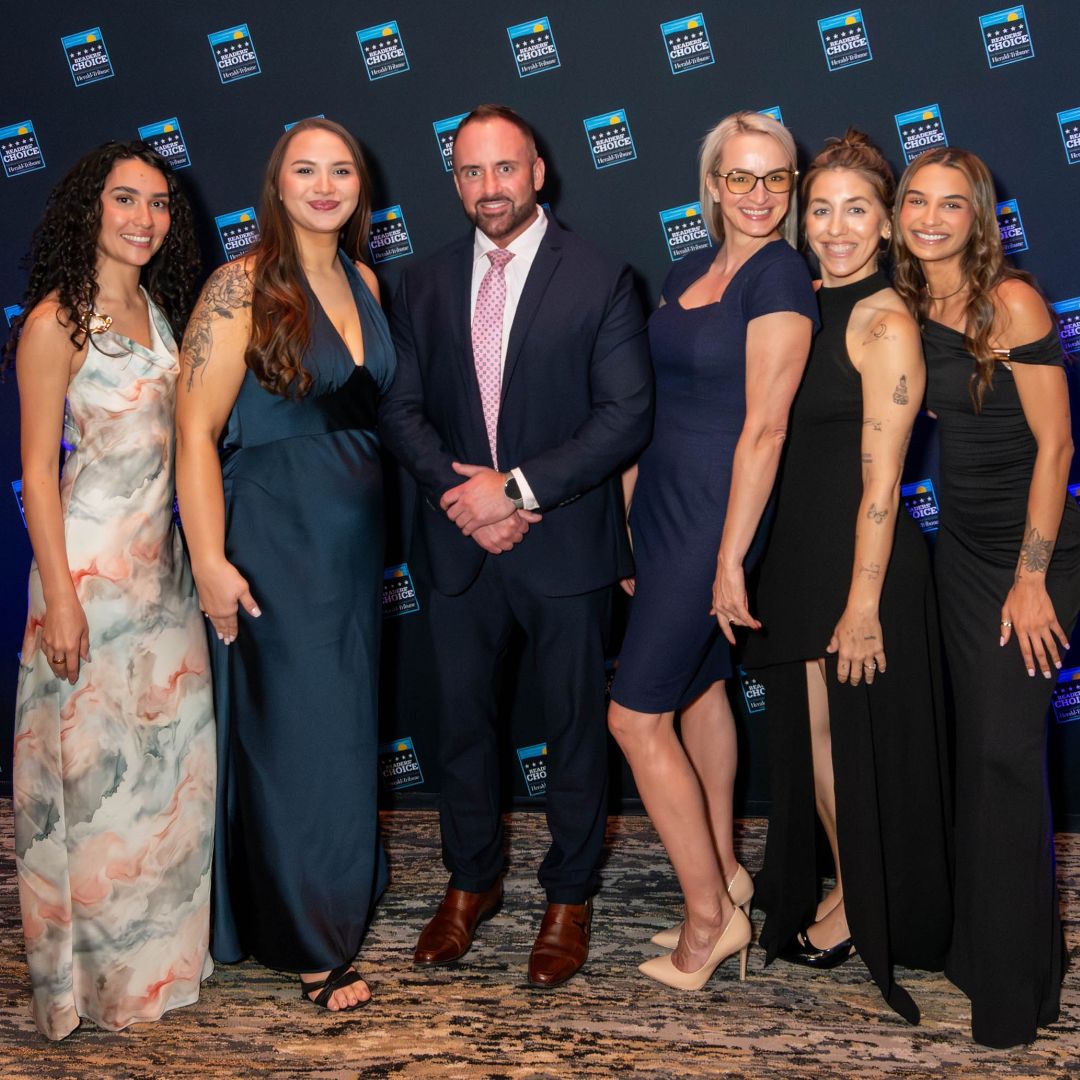
The Eternal family.Christmas, year one.Not a figure of speech.
Somewhere in there the numbers started saying something on their own: more than 1,200 guests, 3,000 appointments, and nearly 200 reviews in under twelve months.
Still, most weeks, someone walks in who spent months looking for the person they trusted and finally found them. Some of them stop in the entryway for a second and say they hadn't expected it to look like this. That is the part neither of them has gotten used to: being found, over and over, by people who had every reason to stop looking.
None of that was built by two people. It was built by the providers and the front desk staff who chose to come here when this was still an idea with a lease on it, and who have stayed through every week since. A year in, not one person has left. In this industry that is close to unheard of, and it is not an accident.
Which is the whole thing, really. Without the guests who walk through that door there is no business here — only two people and an idea again.They are not the audience for this story. They are the reason there is one. Nobody who works here has forgotten that. Every one of them walked in on trust before there was any proof — the same currency this whole thing has run on since 2006.
How It Works
People First, Or It Doesn't Work
The part that decides whether any of it worked.
Part of earning that trust is being willing to lose the sale. The providers here will tell a guest no — that a treatment isn't right, or isn't right yet, or won't do what they are hoping it will do. Saying no costs money, and it is also the entire point.
The same question sits underneath every other decision. When a service is considered, the first thing asked is not whether it will sell, or whether someone down the road already offers it. It is whether it will leave a guest better off. The things a guest never sees get chosen the same way — training, continuing education, time-off policies, flexibility in a schedule.
It is also why hiring gets slower from here rather than faster. A culture like this one is difficult to build and remarkably easy to dilute.
Let each of you look not only to his own interests, but also to the interests of others.
Philippians 2:4
Look better, feel better, live better, age better isn't a tagline hung on a wall here. It is the order the decisions get made in.
Every service on the menu and every person hired to deliver it comes down to the same question: what does this actually do for the guest in the chair? And the answer has never once been separable from what it does for the person standing beside her. A provider who is trusted, rested and backed gives better care — so the decision that is right for the team and the decision that is right for the guest keep turning out to be the same decision. That is not a philosophy. It is just what happens when a place is built around people instead of around services.
The Golden Year
This One's For You
So it comes back to a treatment room on Clark Road. A guest in a chair, and someone who will tell her the truth. That was never a philosophy anyone chose — it was the only thing available. Two people took each other at their word across a war zone with no proof of anything, and spent nineteen years making good on it. Everything after that, including this building, was just the same habit applied to strangers. If you have ever sat in one of these chairs, that is what you were sitting in the middle of.
Most evenings after work, Antje walks the yard at home. She keeps butterflies — not as decoration, but properly. Milkweed for the monarchs and pipevine for the swallowtails, because those are the only things those caterpillars will eat; firebush for the nectar, which keeps the zebra longwings and gulf fritillaries coming back once they've hatched.
None of it can be hurried. You cannot make a caterpillar into anything. All you can do is understand what the thing in front of you actually needs, make sure it is there, and be patient while it does the work itself. Which is, more or less, what she does all day.
The Lord has done great things for us, and we are filled with joy.
Psalm 126:3
In August they marked nineteen years of marriage. On September 15th, Eternal turns one. There have been a lot of years before this one — the one spent typing across an ocean and a war, the year he was gone while she studied at a kitchen table alone, the thirty months that nearly took the marriage with them.
This is the first one that has felt like it was worth all of the others. That is what the Golden Year means here. Not the milestone, but what it cost to reach it — and everyone who carried a piece of that weight without ever being asked to. The providers and staff who bet on an idea. And the guests who walked in, sat down, and came back.
A story needs someone to tell it to, or it is just a thing that happened. To everyone who trusted Eternal with a piece of themselves this year — you are the part that makes it a story at all. Thank you. This one's for you.
One more thing
The anniversary is September 19, and you’re invited.