
IPL treatment in Sarasota.
★★★★★ 200+ reviews across platforms (opens Google Maps in a new tab)Medically reviewed
IPL (intense pulsed light) treatment at Eternal MedSpa in Sarasota, Florida, targets sun damage, brown spots, redness and uneven tone. It treats color, not deep texture or acne scars, and many guests do best with a series on the Vydence® IPL-SQ. Alexa Martinez, a Licensed Medical Aesthetician and Certified Laser Technician on our medical team, performs it. She works under the oversight of Medical Director Reuben W. Holland III, MD, FACEP.
Not sure what to book? Try the Eternal Plan Builder.

Walk-ins welcome when Alexa is available; booking preferred.
Offered at our Sarasota clinic only.
IPL pricing and planning. One session or a series.
Pigment and redness often improve gradually, so many guests plan a series. Ask for current IPL pricing when you text or book.
Single session
Can create a brighter, fresher look and may help with mild pigment or redness.
Corrective series
Often better for more visible sun damage, redness, capillaries or uneven tone.
Maintenance
SPF, pigment-safe skincare and periodic maintenance help protect results.
- New guests: $50 off when your eligible treatments total $150 or more. One per guest. Offer terms
- Ways to pay: Payment plans through Cherry (preferred) or PatientFi; CareCredit accepted for eligible services.
What IPL treats.
Brown spots
Sun spots, freckles and age spots from sun exposure are often a strong fit.
Sun damage
Visible photodamage and uneven pigment from years of sun.
Redness
Diffuse redness or flushing may be considered when candidacy is appropriate.
Visible capillaries
Selected small vessels, depending on size, location and skin type.
Uneven tone
Blotchy, sun-damaged skin when pigment and redness are the main issues.
Not for deep texture
Pores, acne scars, laxity and resurfacing goals usually fit microneedling (SkinPen), ProDeep or DualMode better. See ProDeep
One light platform. Used for color.
Filters shape the light to target pigment or redness.
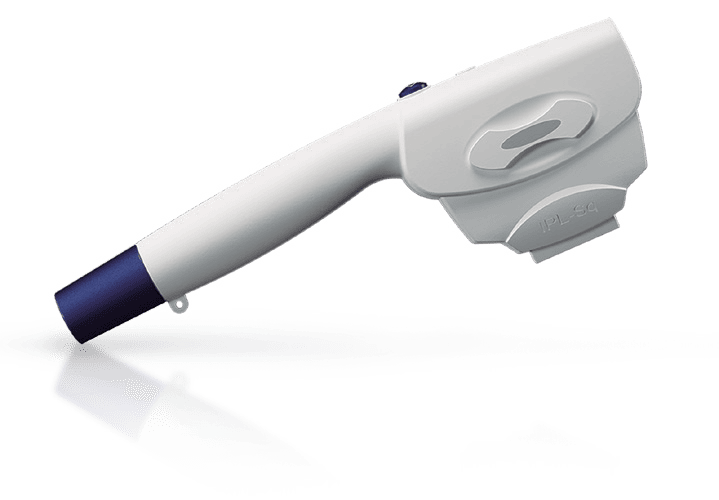
Vydence® IPL-SQ
An IPL platform with Square-Wave Pulse technology, used here mainly for photofacial, pigment, redness and tone goals.
Your care team. Physician-supervised.
Under the oversight of Medical Director Reuben W. Holland III, MD, FACEP.

Alexa Martinez
Medical team · Laser and skinAlexa is a Licensed Medical Aesthetician, Licensed Electrologist and Licensed Tattoo Artist (permanent makeup), and a Certified Laser Technician. She performs light-based and laser skin treatments and laser hair removal at our Sarasota clinic.
Choose Alexa when you book.
What an IPL visit is like.
Consult
We review pigment, redness, skin type, sun exposure, medications and medical history.
Prep
Skin is cleansed, topical products are reviewed and eye protection is used.
Pulse
Controlled pulses of light are delivered to the treatment areas.
Fade
Redness or warmth may follow. Brown spots may darken and flake before fading; tone can improve over time.
Beach trip, boating or an event coming up? Tell us before you book; sun and travel can change IPL timing.
Text a timing questionBefore you book IPL.
What IPL is
Broad-spectrum light that targets pigment and redness without resurfacing.
IPL (intense pulsed light) uses broad-spectrum light and filters to target melanin and hemoglobin in the skin, so it can treat selected pigment and vascular concerns without resurfacing. The Vydence® IPL-SQ's indications include hair removal, skin rejuvenation, pigmented and vascular lesions and superficial active acne. Device capability does not mean every indication fits every guest.
IPL candidacy and risks
Skin type, melasma, tanning and medications help decide whether IPL is a safe match.
Good candidates
Guests whose main concern is color: brown spots, sun damage, redness or visible capillaries. Lighter skin types are often more straightforward.
Tell us first
Recent sun, tanning or self-tanner, melasma, medications and topical products, recent peels or laser, and upcoming outdoor plans.
Sometimes no is safer
Recently tanned or sunburned skin, rash, infection, open lesions or a compromised barrier. We will not treat tanned skin just to keep an appointment.
Common effects
Temporary redness, warmth or mild swelling may occur on the day of treatment.
Pigment risk
Deeper Fitzpatrick skin types may carry higher risk for post-inflammatory hyperpigmentation, hypopigmentation, burns or uneven pigment response if IPL is not appropriate or settings are not carefully selected.
What it cannot do
IPL does not stop future sun damage. We do not promise complete removal of spots, redness or capillaries.
Pregnancy
Laser and light treatments are postponed during pregnancy. If you are pregnant, trying to become pregnant or breastfeeding, tell us before booking.
Aftercare
Daily SPF, less heat and sun, and pigment-safe skincare as directed.
You get instructions specific to your treatment. General aftercare includes consistent SPF and sun-protective habits, avoiding unnecessary heat and sun exposure as instructed, and using pigment-safe skincare only as directed. New sun damage can undo progress.
Questions after IPL?
If something feels unexpected, call 941-216-5221 or text 941-337-8461. For medical emergencies, call 911.
Two clinics, one team. Sarasota and Venice.
One number for both clinics: call 941-216-5221 or text 941-337-8461.
Eternal MedSpa Sarasota
4049 Clark Road, Sarasota, FL 34233
Eternal MedSpa Venice
555 S. Tamiami Trail, Suite 110, Venice, FL 34285
IPL is not offered in Venice. Antje and Jenn see guests in Venice every week. Book online for current times.
Serving Sarasota, Venice, Osprey, Nokomis, Siesta Key, Palmer Ranch, Lakewood Ranch, Bradenton, North Port and Englewood.
IPL questions, answered.
How much does IPL cost at Eternal MedSpa?
For current IPL pricing at Eternal MedSpa in Sarasota, text 941-337-8461 or ask at a complimentary consultation. New guests get $50 off when their eligible treatments total $150 or more, one per guest.
Is IPL the same as a laser?
IPL is not a laser: it uses broad-spectrum light rather than a single laser wavelength. It is often used for pigment, redness and photofacial goals.
Is IPL the same as a photofacial?
“Photofacial” is a common name for light-based treatments like IPL that are used to improve the look of pigment, redness and uneven tone. Eternal MedSpa uses the Vydence® IPL-SQ for IPL photofacials in properly selected candidates.
How many IPL treatments will I need?
The number of IPL treatments depends on your concern, skin type, sun history and severity. Many pigment and redness concerns are best addressed through a series.
How much downtime is there after IPL?
Downtime after IPL is usually light. Temporary redness, warmth and swelling may occur, and brown spots may darken or look coffee-ground-like in the first week before they fade.
Is IPL safe for my skin type?
IPL candidacy depends on Fitzpatrick skin type, tanning and pigment history, melasma risk and medications. Types I–II are often more straightforward candidates, types III and IV need careful review, and for types V–VI another approach may be safer.
Is IPL safe for melasma?
Melasma needs caution with IPL, because heat and light may worsen pigmentation in some guests. Candidacy is evaluated first, and a skincare plan or another approach may be recommended instead.
Can I tan or use self-tanner before IPL?
Avoid tanning, sunburn and self-tanner before IPL, because color on the skin can raise the risk and may delay treatment. Tell us about recent sun and outdoor plans before you book.
How do I choose between IPL, ProDeep, DualMode and microneedling?
Choosing between IPL and other skin treatments starts with the main concern. IPL is often the starting point for pigment and redness, not acne scars or deep texture; ProDeep and microneedling (SkinPen) often suit texture, acne scars and collagen; DualMode is stronger resurfacing. A consultation confirms the safest path.
Can I get IPL while pregnant or breastfeeding?
Laser and light treatments are postponed during pregnancy. If you are pregnant, trying to become pregnant or breastfeeding, tell us before booking.
Who performs IPL at Eternal MedSpa?
At Eternal MedSpa, IPL is performed by Alexa Martinez of our medical team, under the oversight of Medical Director Reuben W. Holland III, MD, FACEP. Alexa is a Licensed Medical Aesthetician, Licensed Electrologist and Licensed Tattoo Artist (permanent makeup), and a Certified Laser Technician.
Can I get IPL in Venice, FL?
IPL is offered only at our Sarasota clinic, 4049 Clark Road. Venice does not offer laser or light treatments, so Venice-area guests book IPL in Sarasota.
Can I walk in for IPL, or should I book?
For IPL, booking ahead is preferred. Walk-ins are welcome when Alexa is available, and reserving online holds your time; if we cannot see you right away, we will help you book a time. You can also call 941-216-5221 or text 941-337-8461.
IPL plans depend on skin type, pigment history, sun exposure, medications and candidacy review. Results vary.
Ask our team first. No pressure.
Consultations are complimentary. Tell us what you are considering, and a member of our team will reach out soon by call, text or email.
Still deciding? Try the Eternal Plan Builder.
Please give 24 hours' notice to cancel or reschedule. Cancellation policy