 Best of Sarasota 2026 Gold

What Makes Dermal Filler Look Natural Instead of Overfilled?
Medically reviewed


Most of us have seen filler that looks like filler. Lips that seem too full for the face. It is easy to blame the product. But filler is not the problem. When filler looks overdone, the plan behind it is usually the reason. Dermal filler is often described as a simple way to add volume. The goal is not to look filled. The goal is to restore balance while keeping a natural result that still looks like you.
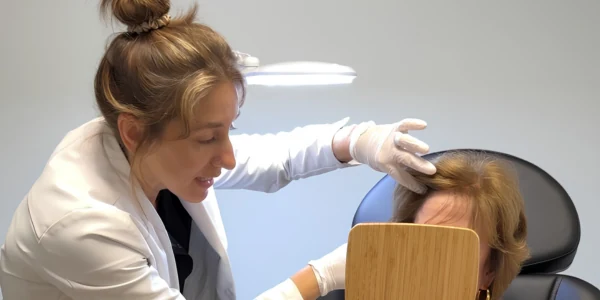
What is dermal filler?
Dermal filler is an injectable product placed under the skin to restore support, contour and balance. It does not relax muscles. That is the job of a wrinkle relaxer.
Filler looks most natural when it replaces what time has taken away. To see why, it helps to look at what actually changes in an aging face.
Why does the face lose volume with age?
The face loses volume because aging happens in several layers at once, not just in the skin. In both men and women, facial aging involves changes in bone, fat, collagen, skin elasticity and the soft tissue that holds everything up.
- Fat. The fat in your face is not one solid layer. It sits in separate pockets, called fat compartments. Researchers found that these compartments are distinct units, and the face does not age as one single mass (Rohrich and Pessa, Plastic and Reconstructive Surgery, 2007). So one area can hollow while the area next to it does not.
- Bone. The facial skeleton changes too. Some areas tend to recede with age, including parts of the midface, the rim around the eye socket and the jaw near the chin (Mendelson and Wong, Aesthetic Plastic Surgery, 2012). When the foundation shrinks, the fat and skin above it have less support.
- Collagen and elasticity. Collagen gives skin its firmness. As collagen declines and skin loses some of its spring, folds deepen and contours soften.
Together, these changes can cause hollowing, deeper folds and a shift in facial balance. This is why the spot that bothers you is not always the spot that needs treatment. A fold near the mouth, for example, may be tied to lost support in the cheek.
Why are there different kinds of filler?
There are different kinds of filler because different materials behave differently in the tissue.
Many fillers use hyaluronic acid (HA). HA occurs naturally in your body. It is part of the support network between your cells, called the extracellular matrix. HA binds water, which helps support hydration and volume. Juvéderm, Restylane and RHA are hyaluronic acid filler families.
Radiesse is different. It uses calcium hydroxylapatite, which has a different structure and a different tissue response.
A careful provider selects the product based on your anatomy, your tissue, the treatment area and the goal, not simply the brand name. A product that suits the lips may not be the right choice for the cheek or the jawline.
What separates a natural filler result from an overdone one?
A natural result starts with an assessment, not a syringe. These are the things that tend to make the difference:
- Finding the cause first. Facial changes may come from volume loss, repeated muscle movement, collagen decline, loose skin, pigment, structural change, or several of these at once. Only some of them are filler problems.
- Balance over volume. The aim is proportion across the whole face, not one feature made bigger.
- The right product for the area. Each material behaves in its own way. The choice should fit your anatomy and your goal.
- Restraint. More filler is not necessarily the answer. A conservative, individualized plan often looks the most natural.
- Honest expectations. No one can give you an exact expiration date for filler. A careful provider sets a realistic expectation and reassesses.
- Preparing you for recovery. You should leave knowing what is normal and what is not.
None of this is about one practice versus another. It is about how a plan is built. It is always fair to ask any provider what they recommend, where and why.
How long does dermal filler last?
There is no universal timeline for how long dermal filler lasts. It depends on the product, where it is placed, the treatment area, your metabolism, how much the area moves, your lifestyle and your own biology.
Some people break down filler quickly. Others keep their correction longer. Results are generally measured in months. Some fillers last longer than others, and in some cases results may approach a year.
That is why we would rather set an accurate expectation and reassess than promise an expiration date.
What is normal after filler?
Temporary changes are common while the treated area settles. These may include:
- Swelling
- Bruising
- Redness
- Tenderness
- Temporary firmness or unevenness
Do not judge your final result on day one. Swelling can make an area look fuller or uneven at first. Give it time to settle.
Follow the aftercare instructions your provider gives you for your treatment. Avoid pressing, rubbing or massaging the area unless you are told to. Ask your provider about exercise, heat, alcohol, dental work, skin care and other treatments around your appointment.
When is a symptom after filler not normal?
A symptom is not normal when it is severe, keeps getting worse, turns the skin pale or blotchy, or affects your vision. Filler is a medical procedure. Serious complications are uncommon, but they need prompt attention.
These signs are not routine after filler and need immediate medical evaluation:
- Severe pain, or pain that keeps getting worse
- Unusual blanching (skin turning pale or white) or a blotchy, mottled color change
- Symptoms that get worse quickly
- Any change in your vision
Why the urgency? In rare cases, filler can block blood flow through a blood vessel. When that happens, the tissue that vessel feeds is at risk, and fast treatment matters (DeLorenzi, Aesthetic Surgery Journal, 2014).
If you notice any of these signs, call us right away at 941-216-5221. If you have vision changes, or we are closed, go to the nearest emergency room or call 911.
Is filler always the answer?
No. Filler is a tool, not the plan.
Your plan may include dermal filler, wrinkle relaxers, collagen-stimulating treatments, laser or light therapy, medical-grade skin care, or no treatment at all. The first step is finding what changed, and why.
We think of healthy aging in three connected parts: look better, feel better and live better. Together, they help you age better. Healthy aging is not about chasing every line. It is about understanding what is changing, keeping what is healthy and choosing your care on purpose.
That is why every plan with us starts with a complimentary consultation. Tell us what you are noticing. We will help you find the right starting point, how much to do and in what order.
Natural-looking filler: common questions.
Why does some filler look overdone?
Filler usually looks overdone when it adds volume without restoring balance, or when it is used for a concern it was not the right tool for. A plan that starts with the cause, uses the right product for the area and holds back on amount tends to look more natural.
Can dermal filler look natural?
Yes, and that is the goal. When filler restores support in proportion to the rest of your face, the result should still look like you.
How long do filler results last?
It depends on the product, the area, your metabolism, how much the area moves and your own biology. Results are generally measured in months, and in some cases they may approach a year.
Is swelling after filler normal?
Yes. Swelling, bruising, redness, tenderness and temporary firmness or unevenness are common while the area settles. Severe or worsening pain, pale or mottled skin, or any change in your vision is not normal and needs immediate medical care.
Which filler is right for me?
The right filler depends on your anatomy, your tissue, the area being treated and your goal, not the brand name. Your provider should explain which product they recommend and why.
Sources.
- DeLorenzi C. Complications of injectable fillers, part 2: vascular complications. Aesthetic Surgery Journal. 2014.
- Mendelson B, Wong CH. Changes in the facial skeleton with aging: implications and clinical applications in facial rejuvenation. Aesthetic Plastic Surgery. 2012.
- Rohrich RJ, Pessa JE. The fat compartments of the face: anatomy and clinical implications for cosmetic surgery. Plastic and Reconstructive Surgery. 2007.
More articles. From our Knowledge Center.

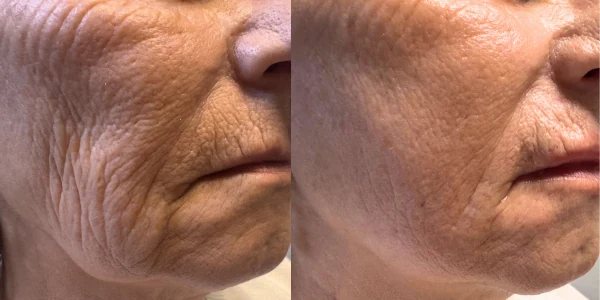

Book your consultation.
Every plan starts with a complimentary consultation.
Reserve your visit in Sarasota or Venice. Prefer to text first? Text us at 941-337-8461.
Still deciding? Try the Eternal Plan Builder.
Please give 24 hours' notice to cancel or reschedule. Cancellation policy
Educational content only. This article does not diagnose, prescribe, determine candidacy, or replace evaluation by an appropriately licensed healthcare provider. Treatment plans depend on health history, goals, and provider assessment. Individual results vary.