 Best of Sarasota 2026 Gold

Does Lack of Sleep Affect Your Skin? Sleep, Stress and Skin Repair
Medically reviewed


You know the morning. You catch the mirror and think: when did I start looking this tired? You are not imagining it. And some of what you see is not aging at all. Your skin does much of its repair work at night. When that work is cut short, it shows. Here is what the research says, why it happens, and how to tell tired skin from aging skin.
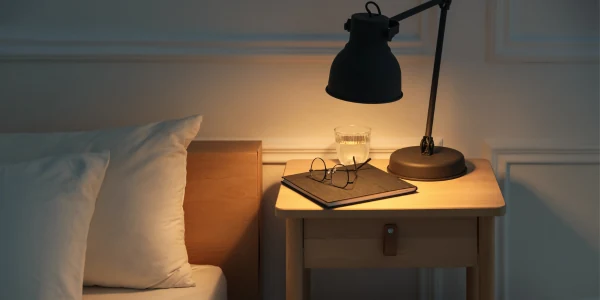
Does lack of sleep affect your skin?
Yes. Small studies show that poor sleep changes how your face looks to other people, and how well your skin recovers.
To see why, it helps to know that your skin keeps its own schedule.
What does your skin do while you sleep?
While you sleep, your skin shifts from defense to repair. Your skin cells have their own clock genes. These genes switch jobs on and off across 24 hours, in a pattern called a circadian rhythm.
A day in the life of your skin:
- Midday: on defense. By day, your skin is geared to protect you from sun and pollution. Oil production peaks around midday.
- Evening: the barrier loosens. Transepidermal water loss, the water your skin gives off into the air, rises in the evening. Your skin also lets more in at this time.
- Midnight: renewal. Keratinocytes, the cells that form your outer skin, divide fastest at night. Some kinds of DNA repair speed up at night too.
- Deep sleep: rebuilding. Much of your daily growth hormone is released in deep sleep. It helps fibroblasts, the cells that make collagen, rebuild and heal.
Why does this matter? Because the repair shift runs on the night. When sleep is short or broken, that shift is cut short too. (Matsui and colleagues, International Journal of Molecular Sciences, 2016.)
What does the research show about sleep and skin?
The research shows that missing sleep makes faces look more tired and less healthy, and that the skin of poor sleepers may recover more slowly. Here are three studies.
“Beauty sleep” is real
In a 2010 study, researchers in Sweden photographed 23 healthy young adults after a normal night’s sleep and again after 31 hours awake. Sixty-five strangers rated the photos without knowing which was which. They rated the tired faces as less healthy and less attractive. (Axelsson and colleagues, BMJ, 2010.)
One lost night shows
In a 2013 follow-up, 40 raters looked closely at faces after normal sleep and after a night with no sleep. In the tired faces, they saw droopier eyelids, darker circles under the eyes, paler skin, and more fine lines around the eyes. (Sundelin and colleagues, Sleep, 2013.)
Poor sleepers recover more slowly
A 2015 study compared 60 women who were either good sleepers or poor sleepers. Researchers used tape to lift the outer layer of the skin, then measured how well the skin barrier recovered. Three days later, the barrier of the good sleepers had recovered 30% better. The good sleepers also showed fewer signs of the kind of skin aging that comes from within, not from the sun. (Oyetakin-White and colleagues, Clinical and Experimental Dermatology, 2015.)
The skin barrier is the outer layer that holds water in. A barrier that recovers slowly is one sign that repair is running behind.
How does stress affect your skin?
Stress can slow how your skin heals. In a 1995 study, researchers made the same small wound in each woman in the study. Women under long-term stress took about 49 days to heal. The other women took about 39 days. (Kiecolt-Glaser and colleagues, The Lancet, 1995.)
The stressed women in that study were caregivers for a relative with Alzheimer’s disease. If you are carrying a lot right now, your skin is carrying it too. That is biology, not a failing. And much of it can recover.
Part of the reason is cortisol, the stress hormone. When cortisol stays high, it can slow the fibroblasts that make collagen.
These are small studies. Some show links rather than proof of cause. But they all point the same way. Rest and recovery matter for your skin.
How can you tell tired skin from aging skin?
Try the vacation test: ask yourself how you look after a rested week away. You did not age overnight. This one question can help sort what rest can fix from what needs care.
If you look better after rest, that part comes back
Puffiness, dullness, and dark circles that come and go are often about recovery, not aging. Sleep, water, daily sunscreen, and a steady skincare routine come first.
If you look the same after rest, that part is treatable
Lines at rest, hollows, sun spots, and looser skin are changes in the skin and in the structure beneath it. Rest alone will not reverse them. The right treatment can help. What fits depends on the cause, so it starts with an assessment.
What helps tired skin recover?
The basics help most: sleep, water, daily sunscreen, and a steady routine. They are simple, but they support the repair work your skin already does every night.
Start small. Tonight, wash your face, put on your night skincare, and go to bed at your usual time.
Your evening routine matters too. In the evening, your skin barrier loosens and lets more in. That is one reason a steady routine with medical-grade skincare matters.
Why does sleep matter after microneedling or laser?
Sleep matters because these treatments rely on your body’s own repair work. Microneedling and laser resurfacing start a controlled healing response in the skin. Your body does the rebuilding over the weeks that follow, and good sleep supports that work. Treatment needs the night shift too.
That is why we suggest planning these treatments for a restful week, not your busiest one. Laser and microneedling are offered at our Sarasota location.
What if sleep itself is the problem?
If your sleep stays broken no matter what you do, hormones may be part of the reason. Maybe you fall asleep fine but wake in the middle of the night. Maybe night sweats break up your sleep. You are not doing anything wrong.
Midlife hormone shifts can disturb sleep in women and men. A hormone evaluation looks at your symptoms, your history and, when needed, your labs. Evaluation and any therapy are medical decisions, not cosmetic ones. Ongoing trouble sleeping is also worth raising with your primary care provider.
How do our providers approach a tired look?
When someone tells us they look tired, we ask how they are sleeping before we talk about treatment. Rest does not replace what we do. It makes what we do work better.
You do not need to have it figured out before you come in. Tell us what you are noticing and how you have been sleeping. At your consultation, we will help you sort what rest can fix from what treatment can.
Sleep and skin: common questions.
Does one bad night of sleep show on your face?
It can. In a 2013 study, people who had been awake for 31 hours were rated as having droopier eyelids, darker circles, paler skin and more fine lines around the eyes.
Can stress slow down skin healing?
Research suggests it can. In a 1995 study, a small wound took about 49 days to heal in women under long-term stress, compared with about 39 days in others.
Are dark circles from lack of sleep or from aging?
They can be either. Dark circles that come and go with rest are often about recovery, while hollows that stay after a rested week are a change in the structure beneath the skin.
Why does a night skincare routine matter?
It matters because your skin barrier loosens in the evening. Your skin gives off more water then and also lets more in, so what you put on before bed counts.
Should I plan sleep around microneedling or laser treatment?
Yes. Microneedling and laser resurfacing start a healing response, and your body does the rebuilding over the weeks that follow, so plan them for a restful week when you can.
Can hormones affect your sleep?
Yes. Midlife hormone shifts can disturb sleep in women and men. If you wake in the middle of the night or have night sweats, a hormone evaluation and a talk with your primary care provider can help find the cause.
Sources.
- Axelsson J, et al. Beauty sleep: experimental study on the perceived health and attractiveness of sleep deprived people. BMJ. 2010.
- Sundelin T, et al. Cues of fatigue: effects of sleep deprivation on facial appearance. Sleep. 2013.
- Oyetakin-White P, et al. Does poor sleep quality affect skin ageing? Clinical and Experimental Dermatology. 2015.
- Kiecolt-Glaser JK, et al. Slowing of wound healing by psychological stress. The Lancet. 1995.
- Matsui MS, et al. Biological rhythms in the skin. International Journal of Molecular Sciences. 2016.
More articles. From our Knowledge Center.

Book your consultation.
Every plan starts with a complimentary consultation.
Reserve your visit in Sarasota or Venice. Prefer to text first? Text us at 941-337-8461.
Still deciding? Try the Eternal Plan Builder.
Please give 24 hours' notice to cancel or reschedule. Cancellation policy
Educational content only. This article does not diagnose, prescribe, determine candidacy, or replace evaluation by an appropriately licensed healthcare provider. Treatment plans depend on health history, goals, and provider assessment. Individual results vary.